




Grade 1
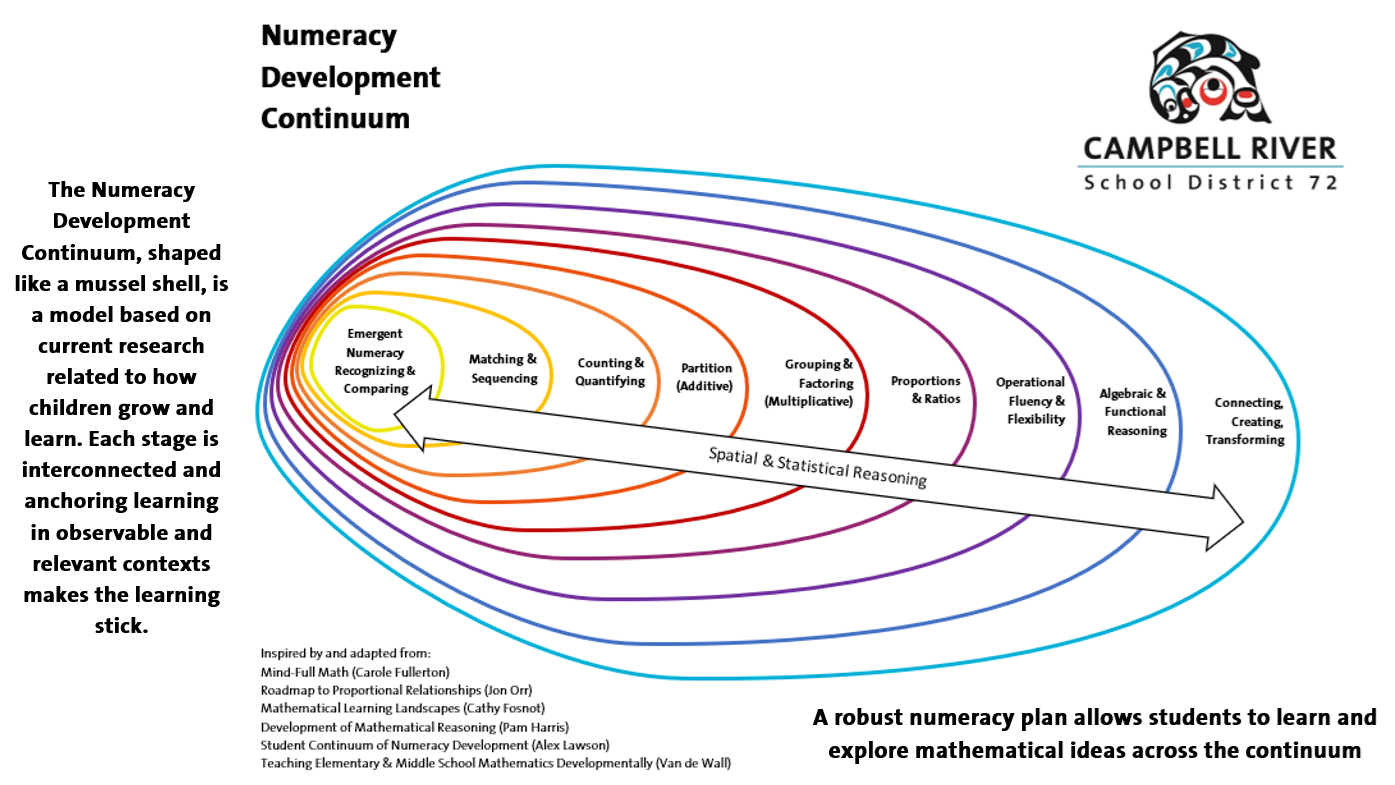
The BC math curriculum for Primary grades (K,1,2) is based on the first 4 stages of developmental numeracy.
 Brochure: Strategies and Models Used in Math K-2
In the table below, you will find instructional resources organized by theme as well as according to discrete skills for Grade 1 Math (subitizing, sorting, counting, reading and writing numerals). Many of the "Primary Math Packs" include pre-writing, fine-motor, matching, and patterning activities as well as counting practice.
Curricular Competencies | ||||
| Understand & Solve (activate curiosity, play, practice, recall) | Communicate & Represent (use vocabulary & visualize) | Reason & Analyze (Use logic, infer missing information, use & interpret patterns, compare, equate) | Connect & Reflect (Consolidate understanding, think creatively, connect ideas, seek challenges) | |
| Common Models for Grade 1 | Concrete Models
| Pictorial Models
| Symbolic Models
| Learning through Stories
|
| Patterning | Develop pattern recognition and reproduction skills through play
Patterns in Nature Kit MAKT-0393 | Describe attributes as seen and modeled in simple patterns - can be done using counting collections, beads, blocks, etc. | As number sense, recognition of numerals, and fluency with vocabulary for describing colours and shapes develop, students should be encouraged to build and describe their own patterns. |
|
| Counting |
| Connection: Financial Literacy
| ||
| Subitizing |
| Visualize Doubles, Doubles plus 1, "Friends of Ten" with fingers / hands / bead counters | Roll & Read Activities (Connect Math and Literacy) 10 Black Dots | |
| Sorting | Beautiful Buttons Counting Mat For use with the Beautiful Buttons Math Kit MAKT-0405 | Fact Bowls Sorting Mat (Use to sort dot cards, number cards, or ten-frame cards) Playing "Go Fish!" style matching games is also a good way to reinforce sorting skills. | Early sorting can be done with counting collections, classroom supplies, and games with a variety of components (ie. Magna-tiles, pattern blocks, dominoes, lego)
| Recommended Picture Book: The Button Box by Margarette Reid ( ) |
| Culturally Sustaining Pedagogy Interweaving Math Poster | Connecting to Place Exploring West Coast Ecosystems
| Connecting to Language
Language & Math Resources Colours and Counting with Frogs Kit INDIG ED-0035 French Resources Page | Connecting to Culture and Community
Recommended Resource FNESC Math First Peoples Guide | Recommended Resources: "Messy Maths" Book (TTMAKT-0240) "1,2,3 Salish Sea" by Nikki McClure Seasonal Cycle and 13 Moons Calendar Lessons (Resource Under Development) |
Seasonal Resources
Instructional and Assessment Routines
| Common Formative Numeracy Assessment (CFNA) Section 8 of the District Numeracy Framework SNAP Number Sense Instructional Routine Recommended Resource: Number Sense Booklets from "Penny Drop Teaching" | K-2 Numeracy Resource Sampler Pack (Includes Number of the Day Routine Template) |
| Games for Fluency Building in Math | High-Yield Routines for Elementary Curated list with links to recommended resources |

 Google Translate