




Kindergarten
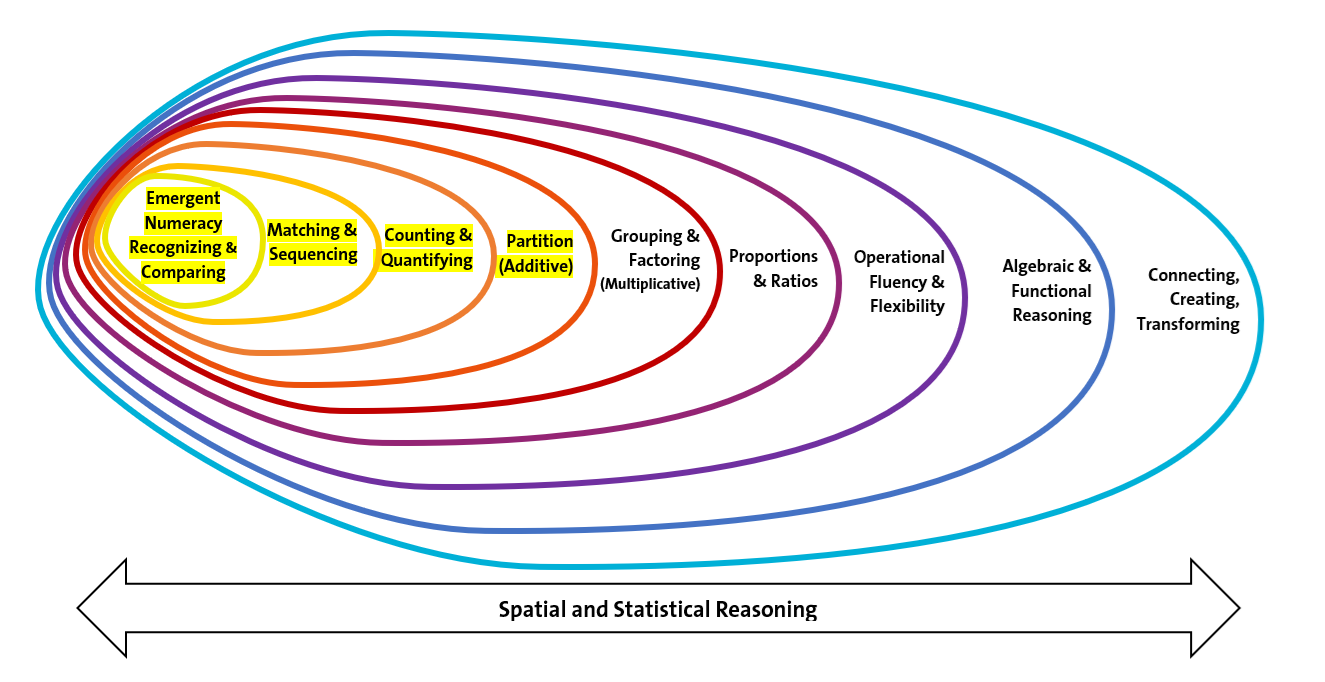 The BC math curriculum for Primary grades (K,1,2) is based on the first 4 stages of developmental numeracy.
Brochure: Strategies and Models Used in Math K-2
In the table below, you will find instructional resources organized by curricular competency as well as according to discrete skills for Kindergarten Math (subitizing, sorting, counting, reading and writing numerals). Many of the "Math Packs" include pre-writing, fine-motor, matching, and patterning activities as well as counting practice.
| Numeracy 0_1 Year Plan.pdf | Curricular Competencies | |||
| Literacy Connections Math Picture Books by topic | Understand & Solve (activate curiosity, play, practice, recall) | Communicate & Represent (use vocabulary & visualize) | Reason & Analyze (Use logic, infer missing information, use & interpret patterns, compare, equate) | Connect & Reflect (Consolidate understanding, think creatively, connect ideas, seek challenges) |
| Subitizing |
| Apple Subitizing Mats: Use to tell a story that begins with "I have ____ apples..." | Use the examples above or students can design their own once they are familiar with the concept. | Count & Cut Math Mats (Story Mats with various themes) |
| Counting (up to 15) |
|
|
Connection: Financial Literacy | |
| Sorting (Separating things into distinct groups based on criteria) |
|
|
|
|
| Patterning |
Recommended Manipulatives:
|
| As number sense, recognition of numerals, and fluency with vocabulary for describing colours and shapes develop, students should be encouraged to build and describe their own patterns. Recommended Digital Resource: Pips Game | How do we using numbers, words, colours, and symbols to organize and arrange things?
|
| Culturally Sustaining Pedagogy Interweaving Math Poster | Connecting to Place Exploring West Coast Ecosystems
| Connecting to Language
| Connecting to Culture and Community
| Connecting to Careers and Society
|
| Seasonal Resources Seasonal Cycle and 13 Moons Calendar Lessons (Resource Under Development) | Fall (colours, shapes, harvest) | Winter (cold weather, clothing, arctic animals)
| Spring(hatching, frogs, eggs, bugs)
| Summer (beach, ocean, gardening) |
Instructional and Assessment Routines
| Common Formative Numeracy Assessment (CFNA) Section 8 of the District Numeracy Framework | K-2 Numeracy Resource Sampler Pack (Includes Number of the Day Routine Template) |
| Games for Fluency Building in Math | High-Yield Routines for Elementary Curated list with links to recommended resources |

 Google Translate