




Grade 2
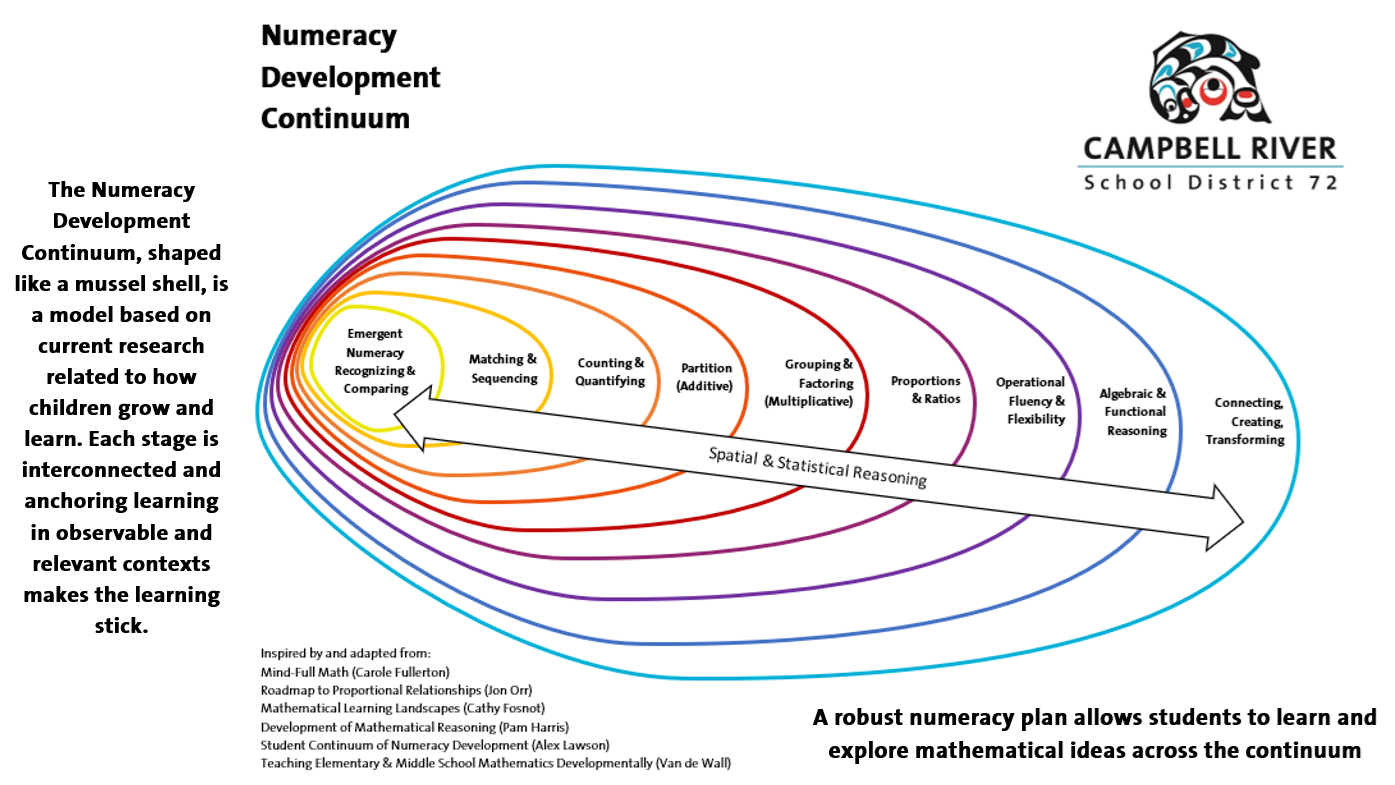
The BC math curriculum for Primary grades (K,1,2) is based on the first 4 stages of developmental numeracy.
 Brochure: Strategies and Models Used in Math K-2
In the table below, you will find instructional resources organized by theme as well as according to discrete skills for Grade 2 Math (ex. counting, comparing, composing and decomposing numbers). Many of the "Primary Math Packs" include pre-writing, fine-motor, matching, and patterning activities as well as counting practice. Emphasis at this grade level is on additive reasoning, including building larger numbers from smaller numbers.
Curricular Competencies | ||||
| Numeracy 2 Year Plan.pdf | Understand & Solve (activate curiosity, play, practice, recall) | Communicate & Represent (use vocabulary & visualize) | Reason & Analyze (Use logic, infer missing information, use & interpret patterns, compare, equate) | Connect & Reflect (Consolidate understanding, think creatively, connect ideas, seek challenges) |
| Common Models in Grade 2 | Concrete Models
| Pictorial Models (1:1) Dice
(Masters to print or project) | Symbolic Models
(MAKT-0406) & (MAKT-0401) | Learning through Stories
|
Number Sense
Penny Drop Teaching Number Sense Booklets |
Maze 100 Chart (by Steve Wyborney) - download to view properly Fact Bowls Sorting Mat (Use to sort dot cards, number cards, or ten-frame cards) |
Esti Mysteries Grade Level Guide Unit ChatsPrimary Tile Questions |
Ascenders Game (played with 2 dice) Think Tank Problem Solving Cards for Gr.2 (MAKT-0357) | Money Sense
Math Books to Teach Counting & Number Theory (MAKT-0383) |
| Operational Fluency |
The Box of Facts (Addition and Subtraction) MAKT-0355 |
|
| Connection: Financial Literacy Financial Literacy Primary Kits (MAKT-0406) & (MAKT-0401) |
| Patterns & Modelling Modelling in Math Trajectory K-12 |
|
|
| Connection: Science Math Patterns in Nature Kit (MAKT-0393) Connection Art: Spiral, Pyramid, beadwork designs |
| Shape & Space Measurement in Math Trajectory K-12 | Geometry
Tangrams Kit (MAKT-0356)
| Measurement
| Equality / Balance
| |
Seasonal Resources
| Fall | Winter | Spring
| Summer Life Cycles Mini-Lessons |
| Culturally Sustaining Pedagogy Interweaving Math Poster | Connecting to Place Exploring West Coast Ecosystems Life Cycles of local plant and animal species
| Connecting to Language
| Connecting to Culture and Community
| Connecting to Careers and Society
|
Instructional and Assessment Routines
| Common Formative Numeracy Assessment (CFNA) Section 8 of the District Numeracy Framework SNAP Number Sense Instructional Routine Recommended Resource: Number Sense Booklets from "Penny Drop Teaching" | K-2 Numeracy Resource Sampler Pack (Includes Number of the Day Routine Template) |
| Games for Fluency Building in Math | High-Yield Routines for Elementary Curated list with links to recommended resources |

 Google Translate