




Numeracy - Experiential Learning Resources
Interweaving In SD72, we use authentic and experiential contexts in mathematics to interweave competencies, content, and culture. This interwoven model of learning speaks to the many interconnected aspects of a learner’s experience in our schools – academic, social, emotional, and cultural. As learners explore new opportunities and learn about themselves, they make mathematical and logical decisions about situations that impact their daily lives and their future. The experience of becoming numerate includes the satisfaction of being able to use mathematics and statistics to understand the world, the joy in using mathematical and critical thinking to improve the lives of others, and the experience of mathematics as a creative and empowering discipline. Being numerate involves recognizing individual strengths and a variety of perspectives and worldviews. Weaving together competencies, content, and culture demonstrates that mathematics is a growing body of knowledge that is created and used by all people and communities. (Adapted from Unpacking Numeracy, MENZ, 2024.) | 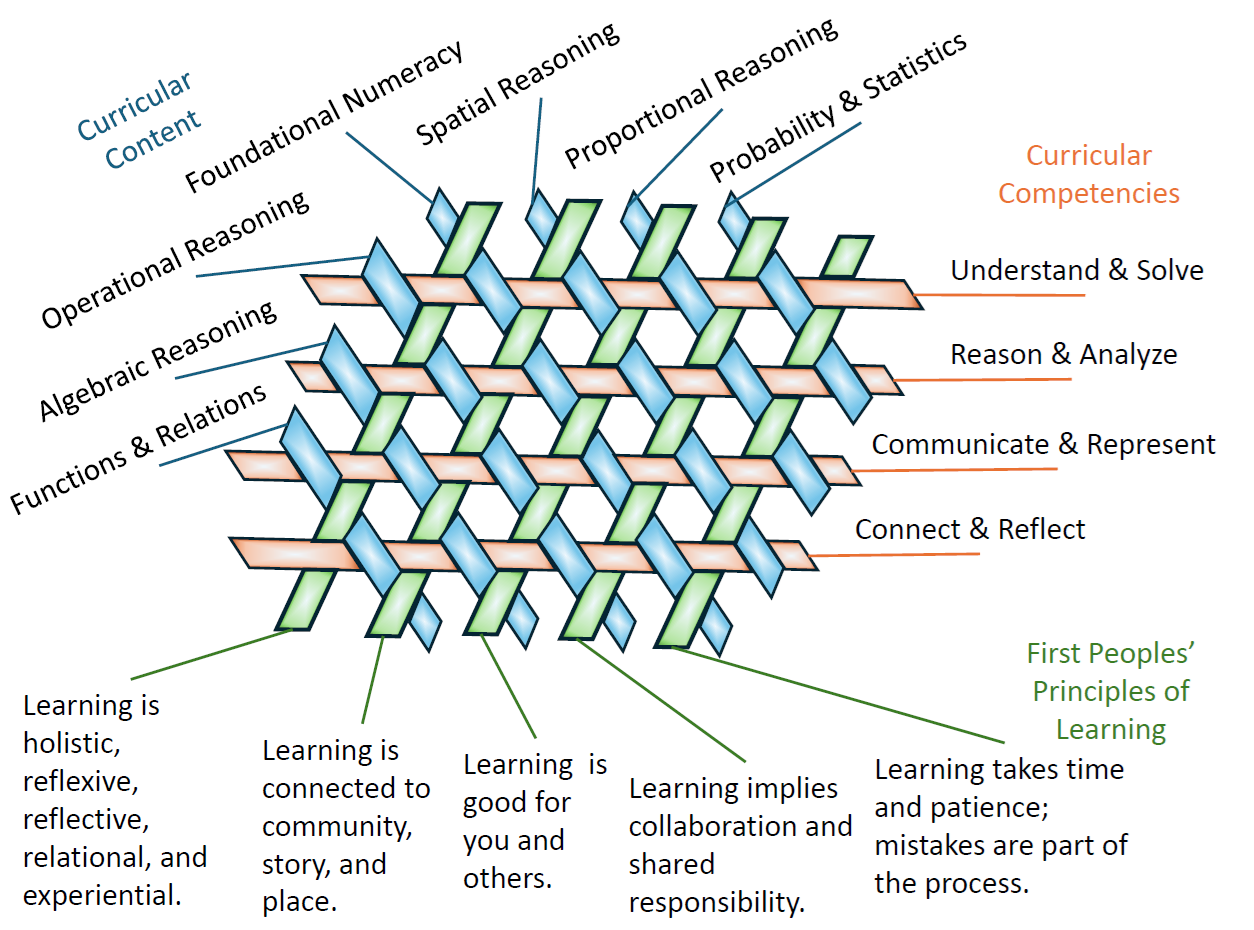 |
Interweaving Poster (PDF)
Why use interweaving?
When numeracy skills are applied in real-world, authentic contexts, students make connections between their lived experience and the math they are learning. | Interconnectedness is a shared understanding “namwayut”, Kwakw’ala: ‘We are all one.’ “ʔukʷs qat̓ᶿɛnxʷɛgəs” , ʔayʔaǰuθəm: ‘We join together.’ “hišukniš ćawaak”, Ehattesaht (Nuu-chah-nulth): ‘Everything is connected.’ Teaching and learning math in SD72 integrates diverse perspectives from multiple communities, engages families and schools, and builds local, national, and global connections. |
Big Ideas K-9 Mathematics K-9 Big Ideas (Table): outlines the key understandings for each grade
Recommended Resources
Connections to Place
Map of SD72 service area: map_SD72_w_nations.png
Nature-Based Math Resources:
Place-based Mathematics SD72.docx
(Includes links to maps from Greenways Land Trust)
Seasonal Round
Locally developed seasonal round, includes both plant and animal seasonal benchmarks, arranged in a circle (Elementary, cross-curricular connection: Math/Science)
Cumberland Forest Study Resource K-9
Useful resource for forest ecosystem studies (cross-curricular)InsideEducation Resources (Environmental and Natural Resource Education K-12)
Exploring the Salish Sea (Teacher's Guide, Grade 4-8)
MAKT-0407 Math in the Forest KitMAKT-0393 Math Patterns in Nature: 5 titles (9 books)
MAKT-0395 Place-Based Math (13 titles)
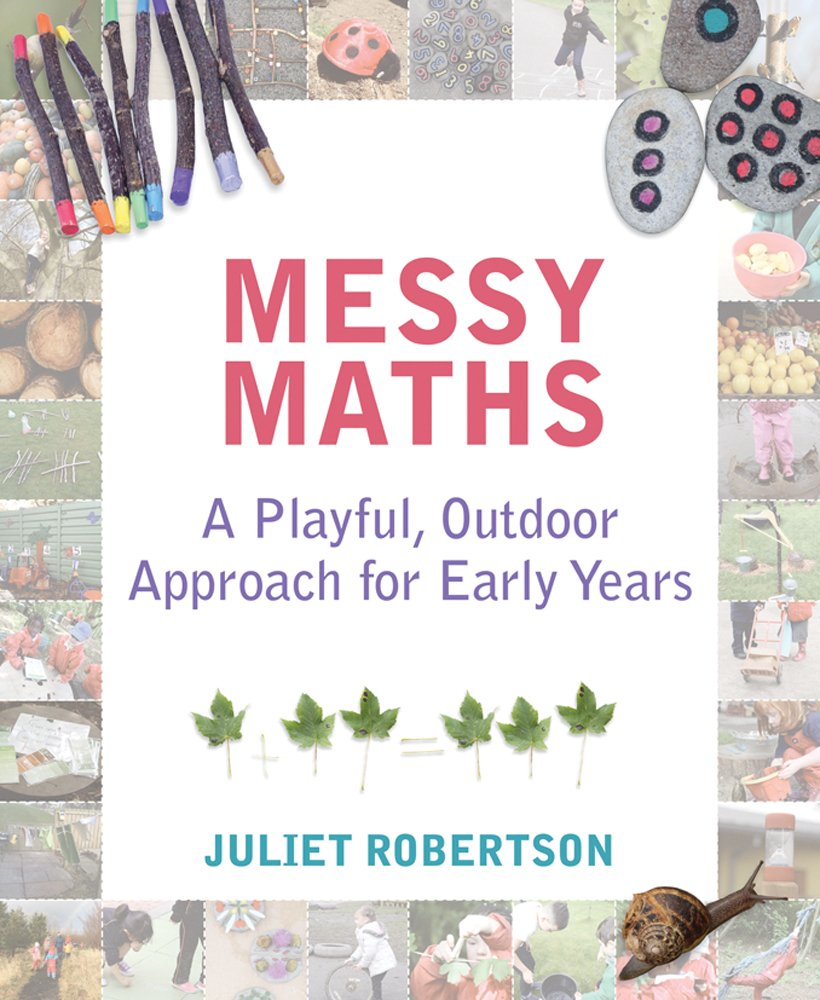
Messy Maths Book (TTMAKT-0240)
Watershed CPR Resources, Salmon Forest Activities
www.gov.bc.ca/FishingRegulations
Coho Salmon Inquiry Sample (PPT)
Math concepts: measurement, data, attributes, cycles, growth, limits, samplingConnections to Language
Math Glossaries
Kwak’wala math glossary (resource under development)
ʔayʔaǰuθəm math glossary (resource under development)
Learning from local stories
Community Films and Current Events
Indigenous Watersheds Initiative
Tribal Journeys Canoe Traditions
Local News Story with math and science connection
First Nations Guardians and Greenways partner to revitalize the Campbell River watershed - Campbell River Mirror
Literacy Connections
Picture Books that Build Numeracy
A list of recommended numeracy-rich books, organized by content area. Most of these titles are available in SD72 classrooms and school libraries.
French Immersion Math Glossary - Elementary
French Immersion Math Glossary - Gr. 9
Reading in Math KITS Available from the Ed. Centre
MAKT-0378 Math Literature to teach: Percent and Decimals (Book)
MAKT-0379 Math Literature to teach: Estimation and Probability (4 books)
MAKT-0380 Math Literature to teach: Geometry and Length/Width (7 titles)
MAKT-0381 Math Literature to Teach: Fractions (8 titles)
MAKT-0382 Math Literature to Teach: Multiplication and Division (11 titles)
MAKT-0383 Math Literature to teach: Counting/Number theory (17 titles)
MAKT-0384 Math Literature to teach: Upper intermediate/middle school (9 titles)Connections to Culture and Community
Math First Peoples - Teacher Resource Guide
"A collection of lessons and resources that are intended to help make mathematics feel more inclusive and engaging." (K-9)
(Source: www.FNESC.ca)
Teaching Mathematics in a First Peoples Context 8 and 9
FNESC resource for incorporating indigenous perspectives and ethnomathematics in grades 8 and 9
First People's Principles of Learning and Math
Learning from mistakes
My Favourite No Routine
Learning from knowledge holdersers
Ethnomathematics (Themes & Interview Questions)
Kits and lessons available through the Indigenous Education Department (with math-related materials)Primary Grades
Intermediate Grades
- FN Math Counting Kit FNMAKT-0004
- Button Blanket Math Kit FNMAKT-0002
- Patterning and Sorting Kit (with buttons)
MAKT-0405
Button Box MathMiddle and High School
- MAKT-0396 TESSELLATION Kit (lesson resource masters are under development)
- FNARKT-0001 Coast Salish Art & Design Kit
- Homalco Hero Stories (Graphic Novel Style, 3 Short Stories), Grade 5+
Math/Science Content: Yield, Harvest, Maximizing, Cycles and Systems (Connections within the Body), Area, Volume- FNMAKT-0003 Mathematical Adventures: The Everything Canoe (Place-Based Lessons)
Culturally Sustaining Pedagogy
Why is classroom culture and environment important in math class?
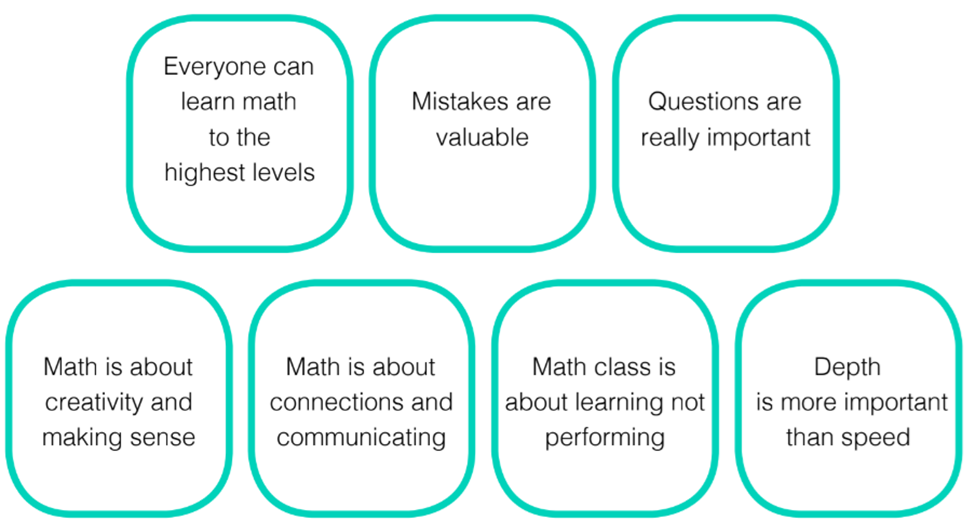
Classroom culture and environment shape students' perceptions of themselves as learners and how they engage with math. Math can often carry anxiety and fixed mindsets of ability; thus, cultivating an emotionally safe, inclusive, and affirming space enables students to take risks, embrace mistakes, persist through challenges tasks, become part of a math community and ultimately improve their mathematical numeracy.
A positive classroom culture supports self-awareness, self-management, social awareness, relationship skills, and responsible decision-making. In math, this translates into students feeling confident to explore mathematical thinking, collaborate with peers, and build resilience when tasks become difficult. When students feel seen, respected, and valued, they are more likely to engage deeply and authentically with numeracy learning.
Mathematical mindset journal template (Jo Boaler)
Integrating SEL and Math Competencies
Table connecting the 4 pillars of the BC Math curriculum K-9 and Social Emotional LearningBuilding Student Success Through Culturally Responsive Assessment
Culturally Responsive Assessment Infographic (4).pdf
Rich Task Self-Assessment
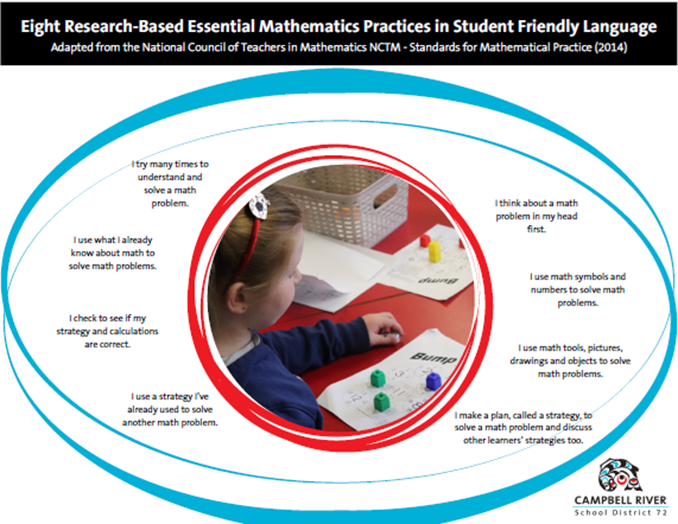
5-step planning / self-assessment template for use with rich tasks or contextualized problems (Grade 4+)Numeracy Practices in Student Centered Language (PDF)
Eight research-based essential mathematics practices in student friendly language (Useful for self-assessments)
Self-assessment templates connected to the BC Core Competencies
Connections to Society and Preparing for the Future
Learning takes time and patience
Measurement Trajectory K-12
Multi-grade trajectory of key measurement concepts, skills, and tools (K-12)
Modelling in Math Trajectory K-12
Multi-grade trajectory of key mathematical modelling concepts and skills (K-12):
Includes what is modeled at each grade level, what concepts are explored, and which models are introduced.
Financial Literacy (Kits available from the Ed. Centre)
Primary Grades:
MAKT-0329 Money, Let's GO Shopping Kit
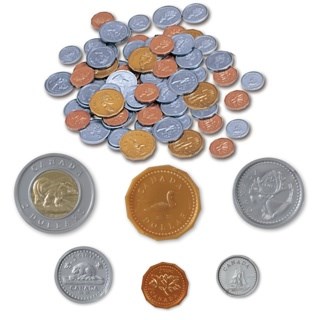
MAKT-0337 Play Money Kit
MAKT-0401 Financial Literacy in Primary: Grades K-3 KIT
MAKT-0406 Financial Literature - Primary
Intermediate Grades:
MAKT-0404 Financial Literacy: Grades 4-5
Middle Years Grades:
MAKT-0402 Financial Literacy: Grades 6-8
Secondary Years:
MAKT-0403 Financial Literacy: Grades 9-12Building Curiosity Through Inquiry K-3 Plant and Animal Inquiry Template Plant and Animal Inquiry Template (Grade 4+)


 Google Translate